Estonian Vocabulary for Beginners: The First Words to Learn
Start with frequency, not the dictionary
As a beginner, the smartest thing you can do is ignore rare words and learn the handful that appear constantly. A few hundred high-frequency words carry an enormous share of everyday Estonian, and because nothing looks familiar, focusing on the most useful words keeps you from drowning.
Here is a sensible first set, grouped by how you will use it.
Greetings and survival phrases
- tere, hello
- aitäh, thank you
- palun, please / you're welcome
- vabandust, sorry / excuse me
- jah / ei, yes / no
People and pronouns
- mina / sina, I / you
- tema, he / she
- meie / teie / nemad, we / you (pl) / they
- inimene, person
- sõber, friend
Everyday objects
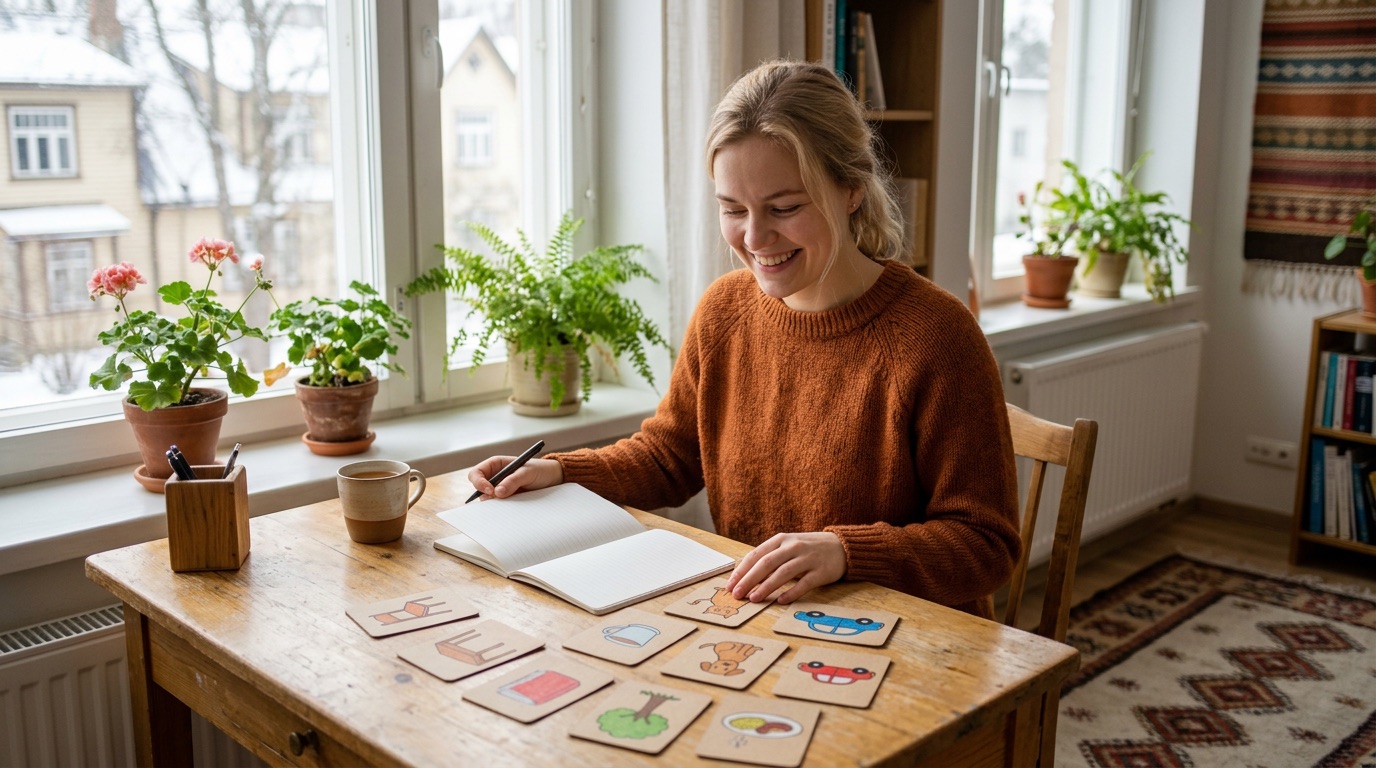
This is where a picture-based approach pays off most, because these are all things you can see and touch, and Estonian gives you no cognates to lean on.
- maja, house
- auto, car
- telefon, phone
- uks, door
- vesi, water
- toit, food
The order that keeps beginners going
Learn greetings first, they give an instant, usable win. Then people and pronouns, so you can build simple sentences. Then everyday objects, which are concrete and easy to picture. Save the 14 cases and other grammar for once these basics feel automatic.
Above all, keep it small and consistent. Ten minutes a day of well-chosen words beats a two-hour binge you never repeat. Be patient with yourself, Estonian rewards the people who simply keep showing up.
Learn your first Estonian words by looking
EstoniaSpeak starts beginners with recognition-only lessons and picture scenes, no typing until you are ready. Free to start.
Frequently asked questions
How many words do I need to start speaking Estonian?
Surprisingly few. With about 100–200 high-frequency words plus a few set phrases, you can handle greetings, shopping and simple everyday exchanges. Comprehension of ordinary speech comes with roughly 2,500–3,000 words.
What are the most important first Estonian words?
Greetings (tere, aitäh, vabandust), yes/no (jah, ei), core pronouns (mina, sina, tema), and everyday nouns you see constantly (maja, auto, vesi, toit).
Should beginners learn Estonian grammar or vocabulary first?
Lead with vocabulary and set phrases, you need words to say anything at all, and layer in the cases gradually. A base of concrete words makes the grammar far easier to absorb later.