Estonian for Bus & Truck Drivers: CPC, Traffic Rules and Vocabulary
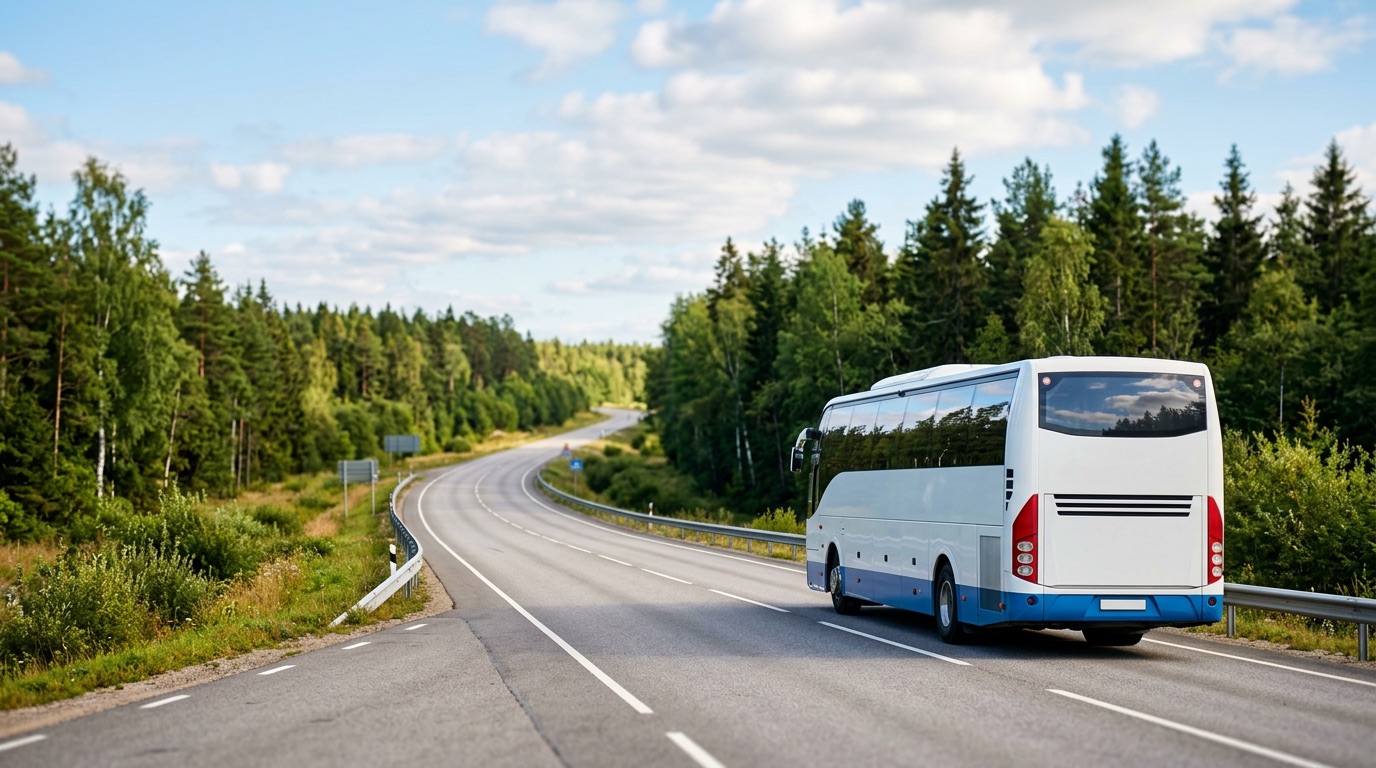
Driving a bus or a truck for a living in Estonia is a regulated profession. On top of holding the right licence, you need the ametipädevus (Certificate of Professional Competence, the EU "Driver CPC"), you have to follow strict tachograph and rest-time rules, and, especially behind the wheel of a passenger bus, you need enough Estonian to deal with riders, colleagues, dispatchers and inspectors. This guide walks through the requirements, the traffic facts worth memorizing, and the practical Estonian vocabulary and phrases you will actually use on the road and at the depot.
What you need to drive professionally
Two things sit on top of an ordinary licence: the correct category for your vehicle and a valid professional-competence qualification.
- Category licence. Trucks require category C (rigid heavy goods vehicle) or CE (with trailer / articulated). Buses require category D (bus) or DE (bus with trailer). These are separate driving-test categories added to your licence.
- Ametipädevus (CPC / ametikoolitus). To carry passengers or goods commercially you also need the Certificate of Professional Competence. You earn it through initial professional training and then keep it by completing periodic training of at least 35 hours in every five-year period at an approved provider. The Transpordiamet (Estonian Transport Administration) regulates and records the qualification.
- Medical fitness and age. Professional drivers must pass a health check, and minimum ages apply per category (lower with an approved CPC in some cases).
- Language. Freight work can be done with limited Estonian plus English, but you still must read Estonian signs and paperwork. Passenger-facing bus roles typically expect around B1 Estonian so you can talk with passengers and staff.
If you are a taxi or ride-hailing driver rather than a bus or truck driver, the rules are different, see our Estonian for Taxi Drivers guide.
Traffic and rest-time facts worth knowing
These are the numbers that come up in daily driving and in CPC training. Confirm current details with the Transpordiamet, as limits can change by section and season.
- Speed limits: 50 km/h in built-up areas (asula), 90 km/h on rural roads (maantee), and up to 110 km/h on expressways (mootortee) on qualifying sections in summer. Buses and heavy vehicles have lower type-based maximums, follow the posted limit and your vehicle rating.
- Driving and breaks (EU Regulation 561/2006): after 4.5 hours of driving, take a break of at least 45 minutes. Daily driving is normally capped at 9 hours (10 hours twice a week).
- Daily rest: at least 11 hours per day (reducible to 9 hours up to three times between weekly rests).
- Tachograph: records driving, breaks and rest. Set it correctly, use the right mode, and keep records available for inspection.
- Alcohol: an administrative offense starts at 0.20‰ blood alcohol; it becomes a criminal offense from 1.50‰. For a professional driver, treat zero as the only safe number.
- Winter tyres: mandatory 1 December – 1 March; studded tyres allowed 15 October – 31 March, extendable by conditions.
- Priority: at unmarked junctions you give way to the right (parempoolse tee eesõigus).
- Emergency number: 112 for accidents, injuries or breakdowns that block the road.
Vehicle vocabulary
The parts and controls you talk about at the depot, at inspection, or with a mechanic.
| Estonian | English | Notes / pronunciation |
|---|---|---|
| buss | bus | BOOSS |
| veoauto | truck / lorry | VEH-oh-ow-toh |
| haagis | trailer | HAA-gis |
| rool | steering wheel | ROHL |
| pidur | brake | PIH-dur |
| käigukast | gearbox | KAI-goo-kast |
| mootor | engine | MOH-tor |
| rehv | tyre | REHV |
| tuled | lights | TOO-led |
| kütus | fuel | KÜ-tus |
| tankla | fuel / petrol station | TANK-lah |
Road and signs
| Estonian | English | Notes / pronunciation |
|---|---|---|
| tee | road | TEH |
| maantee | highway / rural road | MAAN-teh |
| ristmik | junction / intersection | RIST-mik |
| liiklusmärk | road sign | LEEK-loos-mark |
| foor | traffic light | FOHR |
| ümbersõit | detour | ÜM-ber-sõit |
| teetööd | road works | TEH-tööd |
| kiiruspiirang | speed limit | KEE-roos-pee-rang |
| parkla | car park / lay-by | PARK-lah |
Cargo and loading (truck)
| Estonian | English | Notes / pronunciation |
|---|---|---|
| kaup | cargo / goods | KOWP |
| koorem | load | KOH-rem |
| laadima | to load | LAA-dih-mah |
| maha laadima | to unload | MAH-hah LAA-dih-mah |
| kaubaalus | pallet | KOW-bah-ah-loos |
| saateleht | delivery note / waybill | SAA-teh-leht |
| ladu | warehouse | LAH-doo |
| kaal | weight | KAAL |
Passengers and tickets (bus)
| Estonian | English | Notes / pronunciation |
|---|---|---|
| reisija | passenger | REY-si-yah |
| pilet | ticket | PIH-let |
| peatus | stop | PEH-ah-toos |
| liin | route / line | LEEN |
| sõiduplaan | timetable | SÕI-doo-plaan |
| sõidukaart | travel card | SÕI-doo-kaart |
| hilinemine | delay | HIH-li-neh-mih-neh |
Tachograph, rest, weather and road conditions
| Estonian | English | Notes / pronunciation |
|---|---|---|
| sõidumeerik | tachograph | SÕI-doo-meh-rik |
| puhkepaus | rest break | POOH-keh-pows |
| tööaeg | working time | TÖÖ-aeg |
| libe tee | slippery road | LIH-beh TEH |
| jäide | black ice | YAI-deh |
| udu | fog | OO-doo |
| lumesadu | snowfall | LOO-meh-sah-doo |
| nähtavus | visibility | NAH-tah-voos |
Phrases you will use on the job
Split into passenger-bus phrases and truck / depot phrases. Practice them out loud until they are automatic.
On the bus
| Estonian | English | Notes / pronunciation |
|---|---|---|
| Piletid, palun. | Tickets, please. | PIH-le-tid, PAH-lun |
| Järgmine peatus on… | The next stop is… | YARG-mih-neh PEH-ah-toos on |
| Palun liikuge tahapoole. | Please move back. | PAH-lun LEEK-oo-geh TAH-hah-poh-leh |
| Kuhu te sõidate? | Where are you traveling to? | KOO-hoo teh SÕI-dah-teh |
| See buss läheb Tartusse. | This bus goes to Tartu. | SEH boos LA-heb TAR-too-seh |
| Väljumine tagumisest uksest. | Exit through the rear door. | VAL-yoo-mih-neh TAH-goo-mih-sest OOK-sest |
| Palun oodake järgmist bussi. | Please wait for the next bus. | PAH-lun OH-dah-keh YARG-mist BOO-si |
Truck and depot
| Estonian | English | Notes / pronunciation |
|---|---|---|
| Kuhu ma maha laadin? | Where do I unload? | KOO-hoo mah MAH-hah LAA-din |
| Koorem on kinnitatud. | The load is secured. | KOH-rem on KIN-ni-tah-tood |
| Mul on vaja puhkepausi. | I need a rest break. | mool on VAH-yah POOH-keh-pow-si |
| Kus ma saan alla kirjutada? | Where do I sign? | koos mah SAAN AL-lah KIR-yoo-tah-dah |
| Saateleht on kaasas. | The delivery note is with me. | SAA-teh-leht on KAA-sas |
| Kaup on kahjustatud. | The goods are damaged. | KOWP on KAH-yoos-tah-tood |
| Kus on lähim tankla? | Where is the nearest fuel station? | koos on LA-him TANK-lah |
| Auto on rikkis. | The vehicle has broken down. | OW-toh on RIK-kis |
A realistic study plan to B1
If you already drive and want the Estonian you need for local bus work or smoother depot life, plan on steady daily practice. Here is a workable path.
- Weeks 1–4, survival basics (A1). Greetings, numbers, times, directions, and the road/vehicle words above. Aim for 15–20 minutes a day and be able to read signs and say your route.
- Months 2–3, everyday transactions (A2). Full sentences for tickets, unloading, breaks and simple problems ("the load is secured", "I need a break"). Add past tense so you can report what happened on a shift.
- Months 4–8, real conversations (B1). Handle passenger questions, dispatcher calls, incident reports and small talk with colleagues. Practice listening to fast, natural Estonian, announcements, radio traffic, spoken instructions.
- Throughout, job-specific drilling. Rehearse the phrase tables until they are automatic, and quiz yourself on the traffic and rest-time facts, which also help in CPC periodic training.
For how B1 fits alongside other professions, see Estonian Language Requirements by Job.
Frequently asked questions
Do bus and truck drivers need to speak Estonian?
For freight (truck) driving on international routes you can get by with limited Estonian plus English, but you still need to read Estonian road signs, notices and delivery paperwork. For passenger-facing bus work, city and coach lines where you sell tickets and answer riders, employers and the Language Act expect roughly B1 Estonian so you can communicate with passengers, colleagues and inspectors. The stronger your Estonian, the more local routes and employers open up.
What is ametipädevus (the CPC) and how do I keep it?
Ametipädevus is the Estonian Certificate of Professional Competence (Driver CPC), required in addition to your category licence to drive buses or trucks professionally. You obtain it through initial professional training and then keep it valid by completing periodic training, at least 35 hours within every five-year period, through an approved training provider. The Transpordiamet (Estonian Transport Administration) regulates the system and records the qualification.
What are the driving and rest-time rules for professional drivers?
Under EU rules (Regulation 561/2006), after 4.5 hours of driving you must take a break of at least 45 minutes, daily driving is normally capped at 9 hours (10 hours twice a week), and you need at least 11 hours of daily rest (reducible to 9 hours up to three times between weekly rests). A tachograph records your driving, breaks and rest, and enforcement officers can inspect it, so keeping it correctly set is part of the job.
What are the speed limits in Estonia?
The default limits are 50 km/h in built-up areas (asula), 90 km/h on rural roads (maantee), and up to 110 km/h on expressways (mootortee) on qualifying sections in summer. Buses and heavy trucks have lower maximums set by vehicle type and signage, so always follow the posted limit and your vehicle's rating.
When are winter tyres mandatory in Estonia?
Winter tyres are compulsory from 1 December to 1 March. Studded tyres are permitted from 15 October to 31 March, and the dates can be extended by the Transport Administration when road and weather conditions require it.
Learn the Estonian a professional driver actually needs
EstoniaSpeak includes an "Estonian for Work" track with profession vocabulary, example sentences, native audio, and practice exams for nurses, security guards, drivers, customer service and teachers, plus the full A1–C1 course.