Estonian for Taxi & Ride-Hail Drivers: Licensing and Passenger Phrases
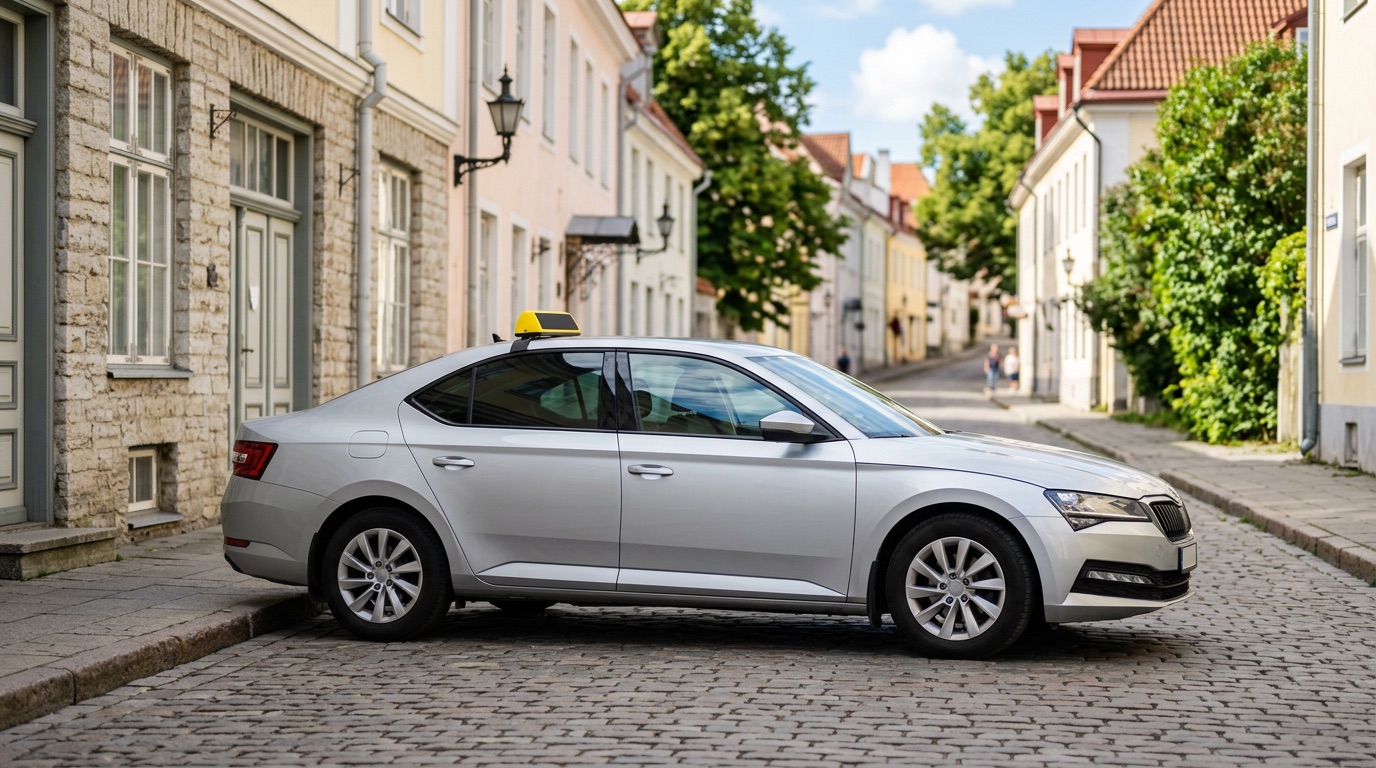
Driving a taxi or working through a ride-hail app is one of the most accessible jobs for newcomers to Estonia, but it is a regulated, passenger-facing profession, not casual gig work. You need the right paperwork, a clean background check, and enough Estonian to actually talk to the people in your car. This guide walks through the licensing requirements, gives you the vocabulary and passenger phrases you will use every shift, and covers the traffic rules every Estonian driver must know. All the Estonian below is written the way locals speak it, with an English gloss and a rough pronunciation.
What you need to drive a taxi in Estonia
Three things sit on top of an ordinary driving licence: a service provider card, a background check, and the Estonian language.
- A driver's service provider card (teenindajakaart). This is the core permit that confirms you may work as a taxi driver. It is issued after your details and record are checked. In the capital, the process is run by the Tallinn mobility department; the vehicle you drive also needs its own card. The Transport Administration (Transpordiamet) oversees the driving-licence and road-transport side.
- A background check. Applicants are screened for a clean record before a card is granted, this protects passengers and is standard for anyone carrying the public for money.
- Estonian at B1. The Language Act (keeleseadus) sets language expectations for professions, and for a customer-facing taxi driver the working standard is B1, the same level required for Estonian citizenship. You prove B1 with a tasemeeksam certificate from Harno (Haridus- ja Noorteamet). Enforcement at the card stage has historically been uneven, but a driver who cannot communicate in Estonian is at a real disadvantage with passengers and officials, so treat B1 as the goal, not a loophole.
- A valid category B driving licence. If you trained abroad, check with Transpordiamet whether your licence is valid to use or must be exchanged.
App-based platforms are huge here, Bolt is itself an Estonian company, founded in Tallinn, and the apps run in English. That makes the technology easy to operate, but it does not replace the card, the background check, or the language: you still need all three to drive legally and to serve local passengers well.
Directions and navigation
Even with a satnav running, passengers give directions out loud. These are the words you hear all shift.
| Estonian | English | Pronunciation |
|---|---|---|
| vasakule | to the left | VAH-sah-kuh-leh |
| paremale | to the right | PAH-reh-mah-leh |
| otse | straight ahead | OT-seh |
| tagasi | back / turn around | TAH-gah-si |
| ristmik | intersection | RIST-mik |
| foor | traffic light | FOHR |
| tänav | street | TAE-nav |
| tee | road | TEH |
| peatus | stop (bus stop / pause) | PEH-ah-tus |
| siin | here | SEEN |
| seal | there | SEH-al |
| aadress | address | AH-dress |
Places in Tallinn and Tartu
Destinations come up constantly. Learn the common landmarks and the words for the kinds of places passengers ask for.
| Estonian | English | Pronunciation |
|---|---|---|
| lennujaam | airport | LEN-nu-yahm |
| rongijaam / raudteejaam | train station | RON-gi-yahm |
| bussijaam | bus station | BUS-si-yahm |
| sadam | port / harbour | SAH-dam |
| vanalinn | Old Town (Tallinn) | VAH-nah-lin |
| haigla | hospital | HIGH-glah |
| hotell | hotel | ho-TELL |
| kesklinn | city center | KESK-lin |
| ülikool | university (Tartu) | UE-li-kohl |
| kaubanduskeskus | shopping mall | KOW-ban-dus-kes-kus |
Money, fares and payment
| Estonian | English | Pronunciation |
|---|---|---|
| hind | price | HIND |
| sõidutasu | fare | SUH-i-du-tah-su |
| arve / kviitung | bill / receipt | AR-veh / KVEE-tung |
| sularaha | cash | SU-lah-rah-hah |
| kaart | card | KAART |
| euro | euro | EU-ro |
| vahetusraha | change (money back) | VAH-heh-tus-rah-hah |
| jootraha | tip | YOHT-rah-hah |
Car parts and time
| Estonian | English | Pronunciation |
|---|---|---|
| turvavöö | seatbelt | TUR-vah-vuh |
| uks | door | UKS |
| pagasiruum | trunk / boot | PAH-gah-si-room |
| aken | window | AH-ken |
| tagaiste | back seat | TAH-gah-is-teh |
| minut | minute | MI-nut |
| hetk | moment | HETK |
| kohe | right away | KO-heh |
Passenger phrases you will use every shift
These are the sentences that make a ride feel professional. Say them in Estonian first; you can repeat in English if the passenger looks unsure.
| Estonian | English | Pronunciation |
|---|---|---|
| Tere! Kuhu soovite sõita? | Hello! Where would you like to go? | TEH-reh, KU-hu SO-vi-teh SUH-i-tah |
| Mis on aadress? | What is the address? | MIS on AH-dress |
| See võtab umbes kümme minutit. | It's about 10 minutes. | SEH VUH-tab UM-bes KUEM-meh MI-nu-tit |
| Kas maksate kaardiga või sularahas? | Do you pay by card or cash? | KAS MAK-sah-teh KAAR-di-gah vuh SU-lah-rah-has |
| Palun kinnitage turvavöö. | Please fasten your seatbelt. | PAH-lun KIN-ni-tah-geh TUR-vah-vuh |
| Kohe sõidame. | We'll set off right away. | KO-heh SUH-i-dah-meh |
| Kas sobib see tee? | Is this route okay? | KAS SO-bib SEH TEH |
| Kas võin siin peatuda? | Can I stop here? | KAS VUH-in SEEN PEH-ah-tu-dah |
| Kohal oleme. | Here we are. | KO-hal O-leh-meh |
| Sõidutasu on kaksteist eurot. | The fare is twelve euros. | SUH-i-du-tah-su on KAKS-teist EU-rot |
| Kas soovite kviitungit? | Would you like a receipt? | KAS SO-vi-teh KVEE-tun-git |
| Vabandust, liiklus on tihe. | Sorry, the traffic is heavy. | VAH-ban-dust, LEEK-lus on TI-heh |
| Kas aitan pagasiga? | Can I help with the luggage? | KAS EYE-tan PAH-gah-si-gah |
| Palun oodake üks hetk. | Please wait one moment. | PAH-lun OH-dah-keh UEKS HETK |
| Aitäh! Ilusat päeva! | Thank you! Have a nice day! | EYE-taeh, I-lu-sat PAE-vah |
| Tere tulemast tagasi! | Welcome back! | TEH-reh TU-leh-mast TAH-gah-si |
Traffic rules every driver must know
You will be quizzed on these in practice, and getting them wrong costs you your licence and your card. These are current Estonian rules.
- Speed limits: 50 km/h in built-up areas (asula), 90 km/h on rural roads (maantee), and up to 110 km/h on expressways (mootortee), typically in summer conditions.
- Drink-driving: an administrative offense starts at 0.20 per mille of blood alcohol; it becomes a criminal offense from 1.50 per mille. For a professional carrying passengers, treat the safe limit as zero.
- Emergency number: 112 for police, ambulance and fire, one number for everything.
- Winter tyres: mandatory from 1 December to 1 March. Studded tyres are permitted across a wider window (from mid-October), and the requirement can be extended when conditions demand.
- Give way to the right at unmarked junctions, and headlights (daytime running lights) stay on at all times.
A realistic study plan to B1
B1 is achievable in roughly six to nine months of steady effort if you practice most days and speak out loud. Here is a route that fits around shifts.
- Months 1–2 (A1): the alphabet and sounds (õ, ä, ö, ü), numbers, greetings, and the phrases table above. Learn to greet a passenger, confirm a destination and state a fare.
- Months 3–4 (A2): the core cases you actually use for directions and places, the "to/into" and "at/on" forms, plus times, days and money. Build the habit of narrating your route in Estonian as you drive.
- Months 5–7 (approaching B1): past tense, polite requests, small talk (weather, the city, where a passenger is from), and handling problems, a wrong address, a card that declines, a lost item.
- Months 8–9: take practice B1 tasemeeksam papers, drill listening and speaking, and register for the real exam with Harno. Passing B1 also counts toward citizenship.
The fastest gains come from speaking with real passengers. Every ride is free practice: greet in Estonian, confirm the route in Estonian, close with Aitäh! Ilusat päeva! even when the passenger answers in English.
Frequently asked questions
Do taxi drivers in Estonia need to speak Estonian?
Yes. Estonian is expected for the taxi profession under the Language Act, and the standard for this passenger-facing role is B1, the same level required for citizenship. Even where enforcement is uneven, a driver who cannot communicate in Estonian struggles with passengers, dispatch and the authorities, so B1 is the realistic working target.
What Estonian level do I need to drive a taxi?
B1 on the CEFR scale, enough to greet passengers, confirm a destination, discuss the route and fare, and handle a card or cash payment. You prove it with a B1 tasemeeksam certificate from Harno.
Do I need a special card to drive a taxi in Estonia?
Yes. You need a driver's service provider card (teenindajakaart), issued after a background check, which confirms you may work as a taxi driver. In Tallinn it is handled by the city's mobility department; the vehicle also needs its own card. You must hold a valid category B driving licence too.
Can I drive for Bolt in Estonia with English only?
Bolt is an Estonian company and its app runs in English, so you can operate the technology in English. But you still need the service provider card and background check, and the profession expects Estonian at B1. English alone leaves you unable to help many local passengers or deal with officials, so learning Estonian is strongly advised.
What is the drink-driving limit for taxi drivers?
The same as for all drivers: an administrative offense from 0.20 per mille, and a criminal offense from 1.50 per mille. For a professional driver, effectively treat the limit as zero. The emergency number is 112.
Learn the Estonian that fills your car with happy passengers
EstoniaSpeak includes an "Estonian for Work" track with profession vocabulary, example sentences, native audio, and practice exams for nurses, security guards, drivers, customer service and teachers, plus the full A1–C1 course.