Estonian for Teachers: The C1 Requirement, Classroom Vocabulary and Phrases
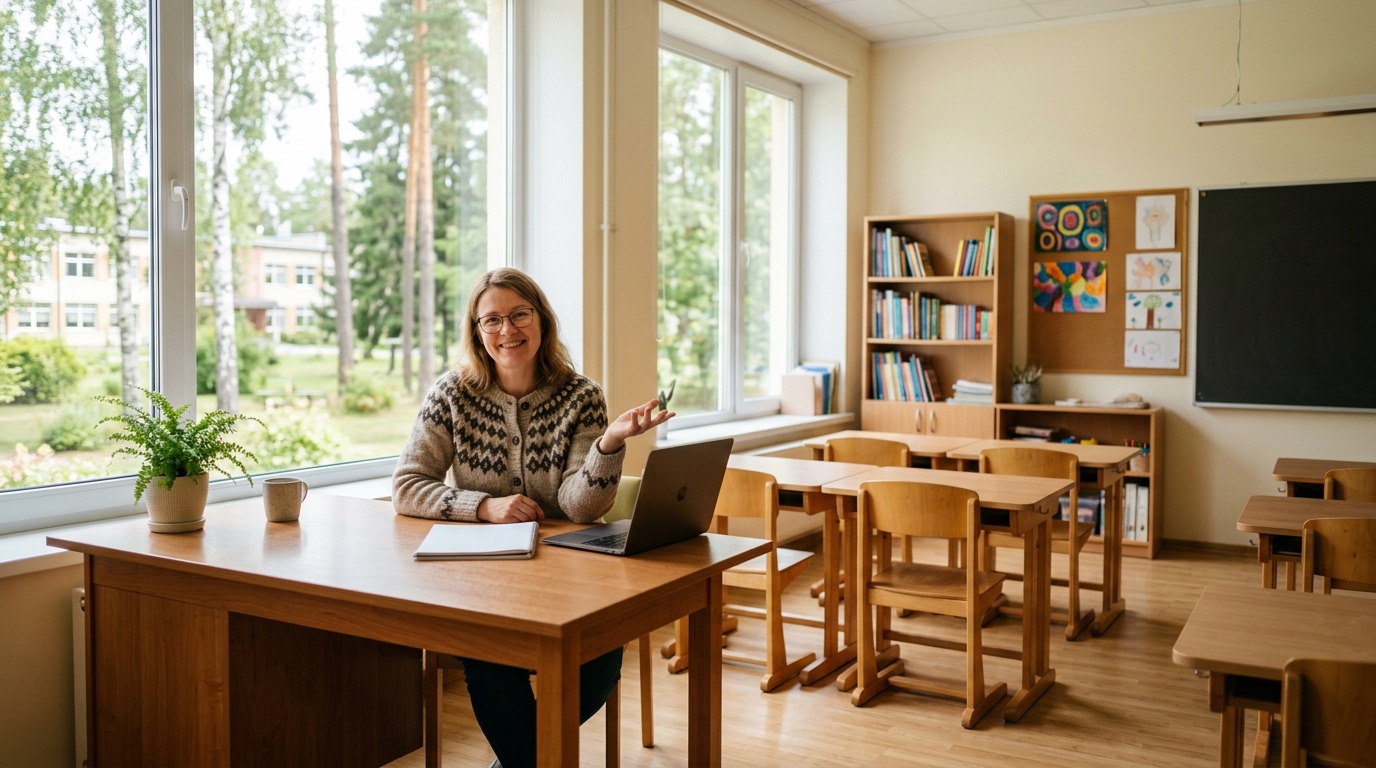
Teaching is one of the most language-intensive jobs there is. You explain, question, correct, encourage, discipline, and report, all day, in one language. In Estonia that language is Estonian, and the law reflects how demanding the work is: a teacher (õpetaja) must hold Estonian at C1, the highest working level on the CEFR scale. This guide covers the requirements, why the bar is set so high, the vocabulary and phrases you actually use in a classroom, and a realistic plan to move from B2 to C1 while you work.
The language requirements for teachers
Estonia is going through a major reform known as the transition to Estonian-language education (üleminek eestikeelsele õppele), moving instruction across the country into Estonian. This has sharply raised demand for Estonian-proficient teachers and assistant teachers, and it is why the language rules matter more than ever.
- Teacher (õpetaja), C1. Set by the Language Act (Keeleseadus) and the school laws. It applies to kindergarten, basic school and upper secondary teachers alike.
- Kindergarten assistant teacher (abiõpetaja), B2 from the 2026/27 school year. A new minimum takes effect on that date. Language training has been run through the Estonian Language Institute to help staff reach it in time.
- Exemption for Estonian-educated staff. If you completed your basic, secondary or higher education in Estonian (at least 60% of studies in Estonian), you generally do not have to sit a separate language exam.
- International-curriculum roles. Schools teaching on an international curriculum have somewhat lower requirements for certain positions, but these are the exception, not the norm.
These figures are set by the Haridus- ja Teadusministeerium (Ministry of Education and Research) and the Language Act; always confirm the current wording for your exact role, since the transition reform continues to phase in changes.
Why C1, and not a lower level?
C1 sounds intimidating, but it maps directly onto what a teacher does every day. Consider the range:
- Presenting and explaining. You deliver structured content and re-explain it three different ways when the first way did not land. That needs a large, flexible vocabulary.
- Nuance and abstraction. Teaching literature, ethics, history or science means handling shades of meaning, hypotheticals and abstract ideas, the heart of C1.
- Writing reports to parents. Progress reports, behavior notes and development summaries must be clear, correct and professional in tone.
- Managing behavior. Calming a conflict, setting a boundary, and being firm but kind all happen in real time, at speed.
- Understanding everyone. Fast child speech, dialect, slang, colleagues in a staff meeting, you need to follow it all without effort.
In short, teaching requires near-full proficiency because the job itself is communication. That is exactly what C1 certifies.
Classroom objects and the room
| Estonian | English | Notes / pronunciation |
|---|---|---|
| klass | classroom / class | KLASS |
| tahvel | blackboard / whiteboard | TAH-vel |
| laud | desk / table | LOWD |
| tool | chair | TOHL |
| raamat | book | RAH-maht |
| vihik | notebook / exercise book | VEE-hik |
| pliiats | pencil | PLEE-ats |
| pastakas | pen | PAS-ta-kas |
| kustutuskumm | eraser | KUS-tu-tus-kumm |
| arvuti | computer | AR-vu-ti |
| õpik | textbook | UH-pik (õ = back close vowel) |
| tund | lesson / class period | TUND |
School subjects (õppeained)
| Estonian | English | Notes / pronunciation |
|---|---|---|
| matemaatika | mathematics | ma-te-MAA-ti-ka |
| eesti keel | Estonian language | EHS-ti KEHL |
| inglise keel | English | ING-li-se KEHL |
| ajalugu | history | A-ya-lu-gu |
| loodusõpetus | natural science | LOH-dus-uh-pe-tus |
| kehaline kasvatus | physical education | KE-ha-li-ne KAS-va-tus |
| kunst | art | KUNST |
| muusika | music | MOO-si-ka |
Instructions and commands
| Estonian | English | Notes / pronunciation |
|---|---|---|
| Kuula | Listen | KOO-la |
| Vaata | Look | VAA-ta |
| Kirjuta | Write | KIR-yu-ta |
| Loe | Read | LO-eh |
| Korda | Repeat | KOR-da |
| Istu | Sit down | IS-tu |
| Tõuse püsti | Stand up | TUH-se PUES-ti |
| Ava | Open | A-va |
Assessment and grades (hindamine)
Estonian schools traditionally use a 5-point scale, where 5 is the best mark and 1 (or 2 as a fail) is the lowest.
| Estonian | English | Notes / pronunciation |
|---|---|---|
| hinne | grade / mark | HIN-ne |
| kontrolltöö | test / class assessment | KON-trol-tuh |
| eksam | exam | EK-sam |
| tunnistus | report card / certificate | TUN-nis-tus |
| viis (5) | five, excellent | VEES |
| hea | good | HE-a |
| rahuldav | satisfactory | RA-hul-dav |
| puudulik | insufficient / fail | POO-du-lik |
Parent communication and early childhood
| Estonian | English | Notes / pronunciation |
|---|---|---|
| lapsevanem | parent | LAP-se-va-nem |
| koosolek | meeting | KOH-so-lek |
| arenguvestlus | development conversation | A-ren-gu-vest-lus |
| kodutöö | homework | KO-du-tuh |
| lasteaed | kindergarten | LAS-te-aed |
| rühm | group (in kindergarten) | RUEHM |
| mänguaeg | playtime | MÄN-gu-aeg |
| uneaeg | nap time | U-ne-aeg |
| abiõpetaja | assistant teacher | A-bi-uh-pe-ta-ja |
Everyday classroom phrases
| Estonian | English | Notes / pronunciation |
|---|---|---|
| Tere hommikust! | Good morning! | TE-re HOM-mi-kust |
| Avage oma raamatud. | Open your books. | A-va-ge O-ma RAH-ma-tud |
| Kuulake tähelepanelikult. | Listen carefully. | KOO-la-ke TÄ-he-le-pa-ne-li-kult |
| Tubli! / Väga hea! | Well done! / Very good! | TUB-li / VÄ-ga HE-a |
| Palun vaikust. | Quiet, please. | PA-lun VAI-kust |
| Kes teab vastust? | Who knows the answer? | KES TE-ab VAS-tust |
| Alustame. | Let's begin. | A-lus-ta-me |
| Homseks kodutööks on… | Homework for tomorrow is… | HOM-seks KO-du-tuhks on |
| Tõstke käsi. | Raise your hand. | TUHST-ke KÄ-si |
| Kas kõik saavad aru? | Does everyone understand? | KAS KUHIK SAA-vad A-ru |
| Tehke paaristööd. | Work in pairs. | TEH-ke PAA-ris-tuhd |
| Võtke vihikud välja. | Take out your notebooks. | VUHT-ke VEE-hi-kud VÄL-ya |
| Aeg on läbi. | Time is up. | AEG on LÄ-bi |
| Loeme koos. | Let's read together. | LO-e-me KOHS |
| Kordame veel kord. | Let's repeat once more. | KOR-da-me VEHL KORD |
| Suurepärane töö! | Excellent work! | SOO-re-pä-ra-ne TUH |
| Palun ole tähelepanelik. | Please pay attention. | PA-lun O-le TÄ-he-le-pa-ne-lik |
| Head aega, näeme homme! | Goodbye, see you tomorrow! | HE-ad AE-ga NÄ-e-me HOM-me |
A study plan: from B2 to C1 while teaching
Most teachers who need to certify already live inside the language, which is a huge advantage, you just need to convert daily exposure into precise, exam-ready skill. A realistic plan across roughly 9–12 months:
- Months 1–2: audit and reading. Take a diagnostic C1 practice test to see your gaps. Read one professional text per day, an article from Õpetajate Leht, a ministry page, a chapter of a textbook, and note ten new words each time.
- Months 3–5: writing. C1 writing trips up many candidates. Write one structured text a week: a parent report, a formal email, an opinion essay. Ask an Estonian-speaking colleague to correct it, and rewrite it clean.
- Months 4–7: speaking under pressure. Volunteer to lead staff-meeting items in Estonian, present at parent evenings, and speak Estonian in the staffroom even when English would be easier. Record yourself explaining a topic for two minutes and listen back.
- Months 6–9: listening at speed. Follow Estonian news, podcasts and radio at natural pace. The C1 listening section uses fast, unscripted speech.
- Final 6–8 weeks: exam drills. Do full timed tasemeeksam practice papers for C1, all four parts, under exam conditions. Register with Harno well ahead of your target date.
Consistency beats intensity. Thirty focused minutes a day, plus using Estonian at work instead of defaulting to English, will move you further than occasional long sessions.
Frequently asked questions
What Estonian level do teachers need in Estonia?
Under the Language Act (Keeleseadus), teachers (õpetaja) must hold Estonian at C1, the highest working level of the CEFR scale. This applies across kindergarten, basic school and upper secondary teachers. Those who completed their basic, secondary or higher education in Estonian (at least 60% of studies in Estonian) are generally exempt from having to sit a separate language exam.
What changes for kindergarten assistant teachers in the 2026/27 school year?
From the 2026/27 school year, kindergarten assistant teachers (abiõpetaja) must have Estonian at least at B2 level. The change is part of Estonia's transition to Estonian-language education (üleminek eestikeelsele õppele). Language training has been offered through the Estonian Language Institute to help staff reach the required level in time.
Can I teach in English in Estonia?
Only in limited settings. International schools and programs on an international curriculum have lower Estonian requirements for some roles. But to teach in the mainstream Estonian public system, C1 Estonian is required, because instruction, assessment and parent communication happen in Estonian. As the country moves to Estonian-language education, English-only teaching roles are shrinking.
How hard is C1 Estonian?
C1 is near-full proficiency: you can present a lesson, explain nuance, argue a point, write a formal report to parents, and follow fast natural speech. For most learners it takes several years to move from B2 to C1, but a working teacher already immersed in the language can get there faster with steady, structured practice.
How is C1 Estonian tested?
Through the state language proficiency examination (tasemeeksam) run by Harno (Haridus- ja Noorteamet). The C1 exam has reading, listening, writing and speaking parts. You register and receive results through Harno, and a passing certificate is accepted as proof of the required level.
Reach C1 the practical way: one classroom word at a time
EstoniaSpeak includes an "Estonian for Work" track with profession vocabulary, example sentences, native audio, and practice exams for nurses, security guards, drivers, customer service and teachers, plus the full A1–C1 course.